
On the side of a nothing road, something unnaturally bright catches my eye. These roads are often viewed from the train, bus or car window. It appears like a nothing town, but maybe it’s not. I start to see vendors set up amidst shacks for homes, selling neon colored substances. So bright, these little balls and squares of candy I presume would make any rainbow blush.
On the Pacific Coast of Mexico, in between the Sierra Madres in the state of Guerrero, the sweetest town in the area rests, easy to recognize for the smells seeping out of those shacks. Juluchuca is known for its production of coconut candies. Shipped all over Mexico, most of the town makes a living selling these sweet treats. A sign above indicates I am about to enter “Dulces de Coco, Cocolores”. Like ringing a door bell and just letting yourself in, I enter this coconut candy “factory”, if it can even be called something so industrial.
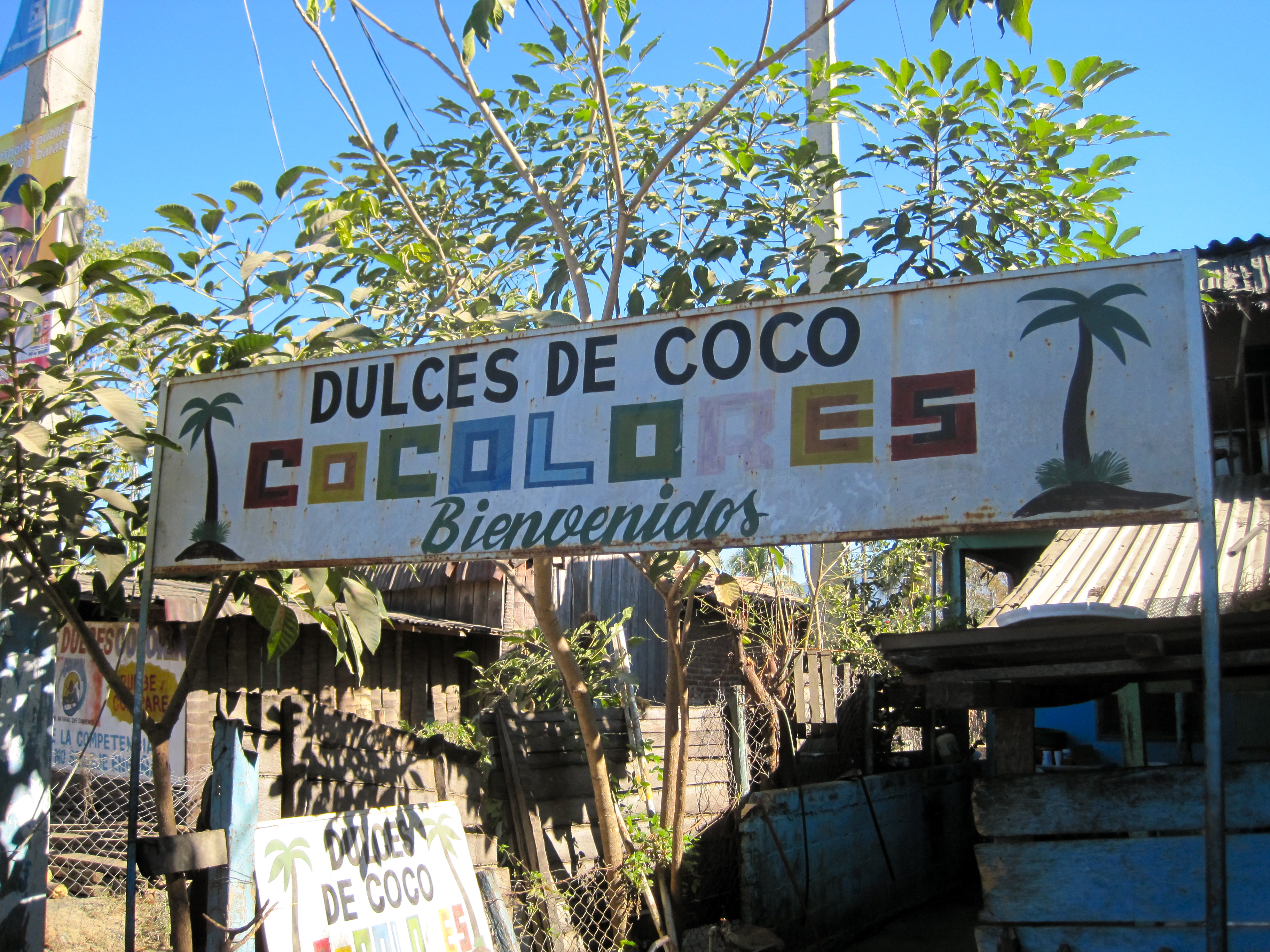
One of Juluchuca's coconut factories
The colors of these candies embody Mexico for me, unnaturally bright, yet strangely beautiful. In the middle of nowhere, Juluchuca seems like a dream, not something of reality. There appears to be no rhyme or reason to how these candies came to be in this location, just as travel can seem at times. The process to make these candies is one the whole family seems to get involved in, with each person responsible for some stage of production. As I wander through each step of the process, I can’t help but equate the production of these bright candies to the traveler’s process of production.
Step 1: Begin with the Natural Material
Each traveler begins a little raw, somewhat rough around the edges. You don’t know what you will encounter first when you set off from home. In the coconut factory here, I watch as young teenage boys take machetes to the coconuts, stripping them of the rough brown exterior. This process is akin to culture shock. You are stripped of your casing and left clean and white. You must leave behind your expectations and go into travel similar to these coconuts, bare and exposed.
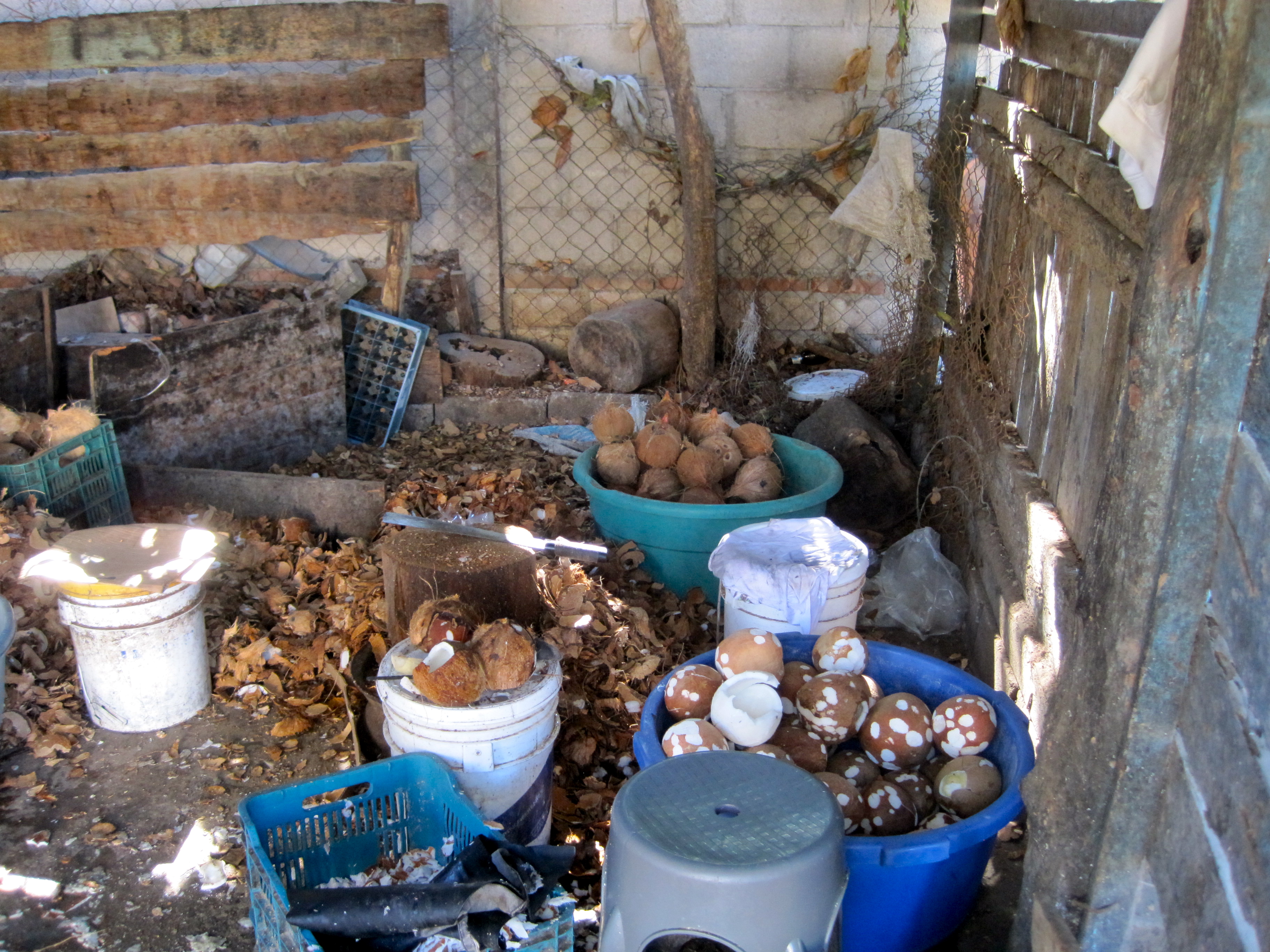
Coconuts in their raw form
Step 2: Undergo Fragmentation
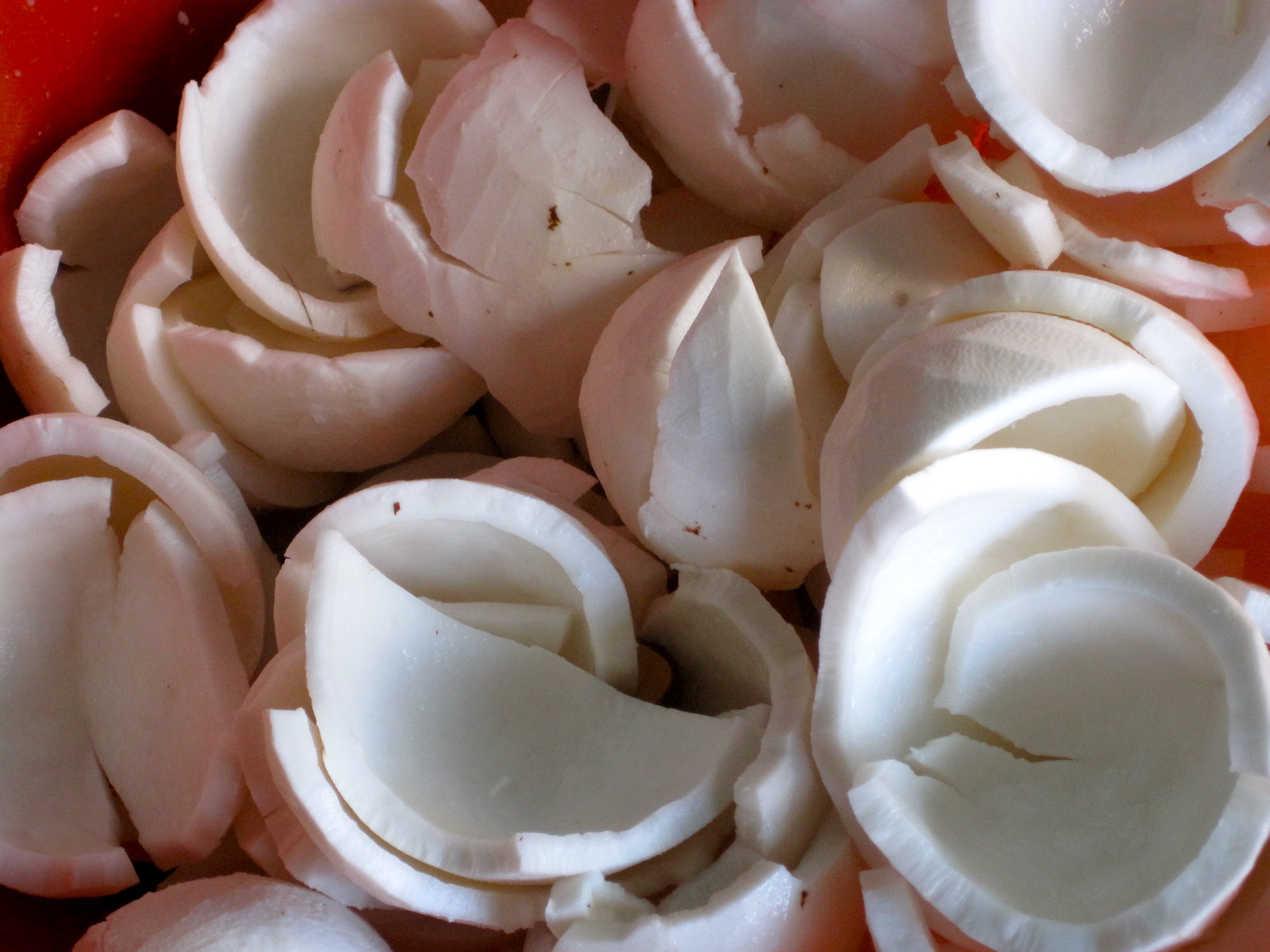
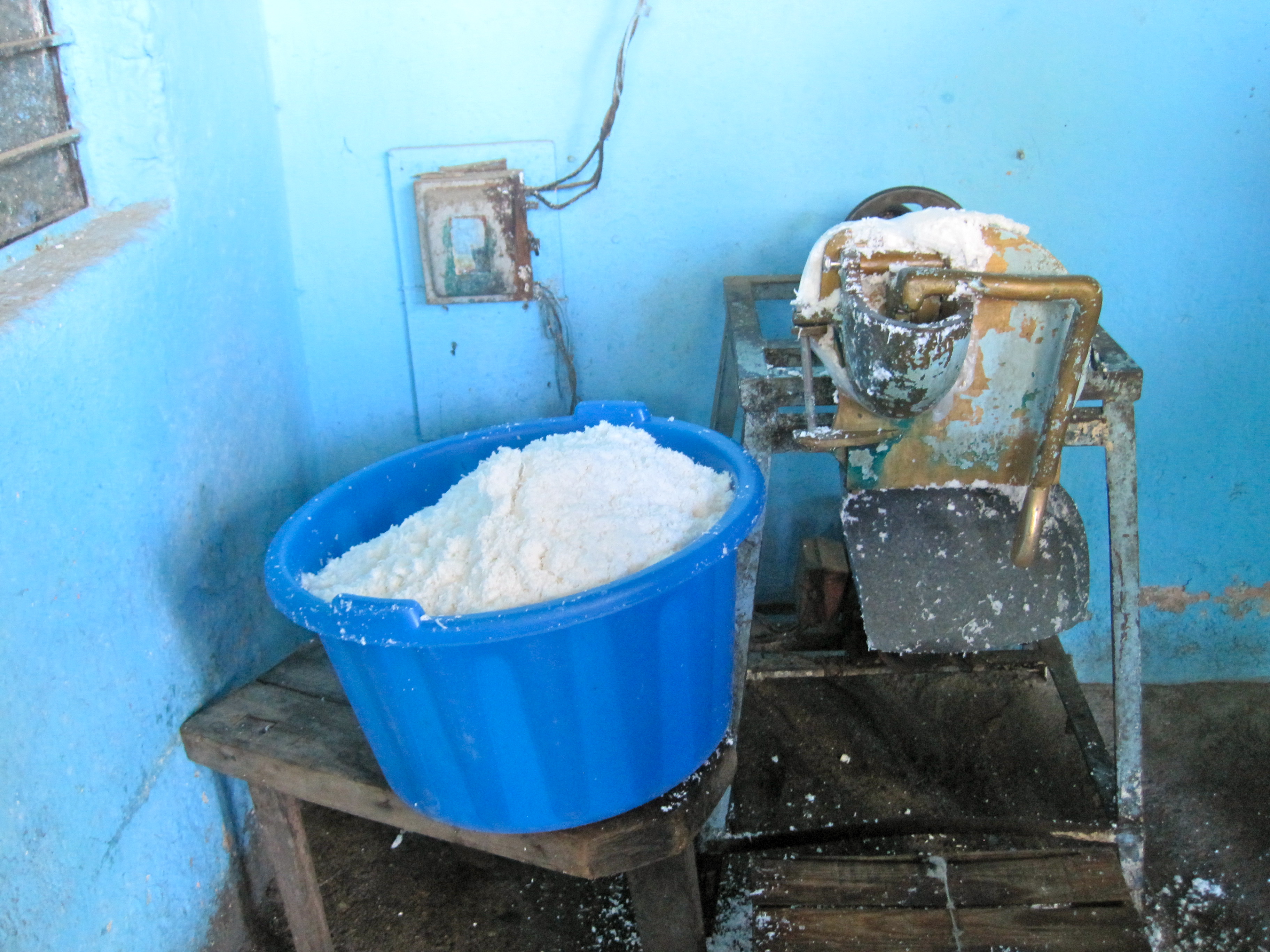
The next step towards producing these candies comes with the shaving of the pieces of stripped coconut. They are put through a device that shaves the pieces into tiny, fine strings. For the traveler, this is the first time you start to feel the place affect tiny pieces of you. After initial culture shock has warn off, tiny facets you didn’t know existed start to come to the table. Travel has changed you and brought those changes to mind, even if it is in the smallest and subtlest of ways.
Step 3: Add The Sweetness and Color
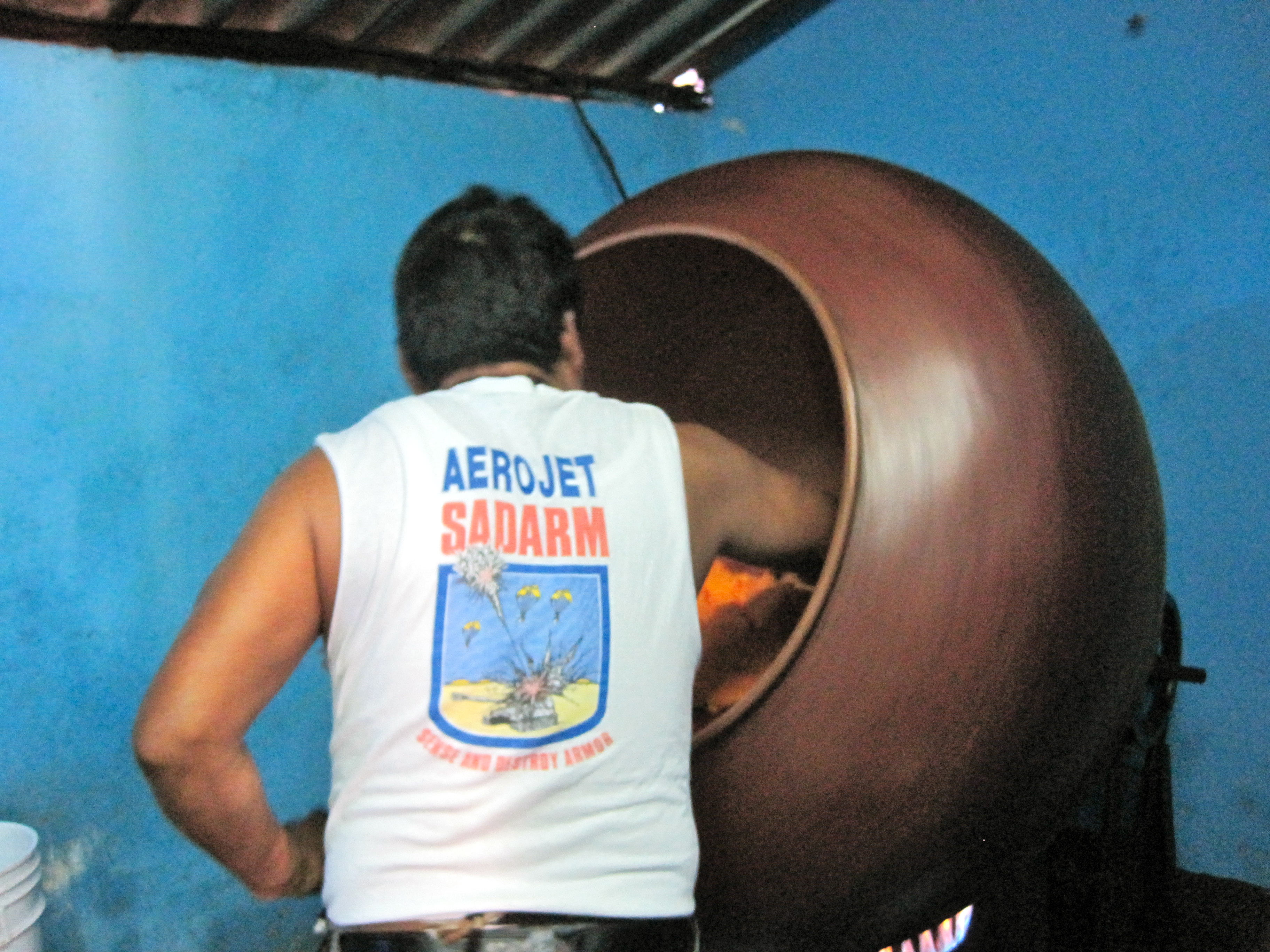
A man turns the shaved coconut in a giant rotating hot pot of sugar. It spins as he sweats, churning it to make the coconut truly sweet. He doesn’t stop from his work. He keeps on churning. Some batches receive those brighter than bright colors, while others keep on a natural color. This would be the experience stage, when you combine with locals or a place in someway, coming out a different color. You are no longer a raw and rough traveler, but rather a colorful one at that, one that has mingled with sugar and come out all the brighter.
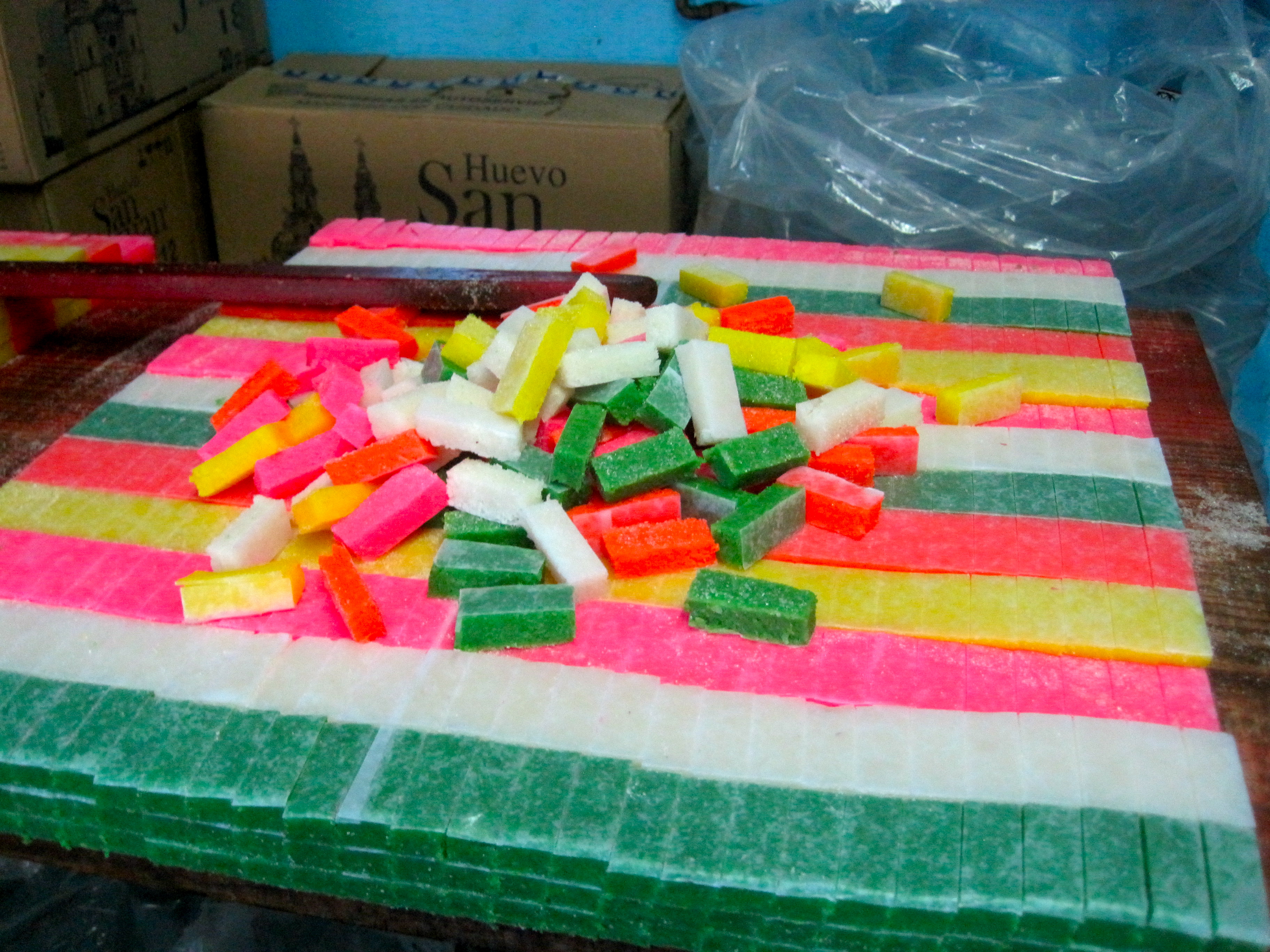
Step 4: The Sharing of Pieces and Eventual Separation
If the coconut confection has been colored, they are then cooked and chopped into rectangular blocks. Bright yellows, pinks and greens make up this color palette today. I taste a green and perhaps it’s mind over body, but it tastes green to me. The more natural colors are assembled into little balls and then cooked like the colored blocks. Mary and Jesus watch over a woman as she builds the blocks of sweet coconut candies into a pattern. She arranges these colorful blocks as fast as her hands can move. Even with a group of journalists pouring over her, snapping photos and snatching pieces of coconut, she never fumbles.
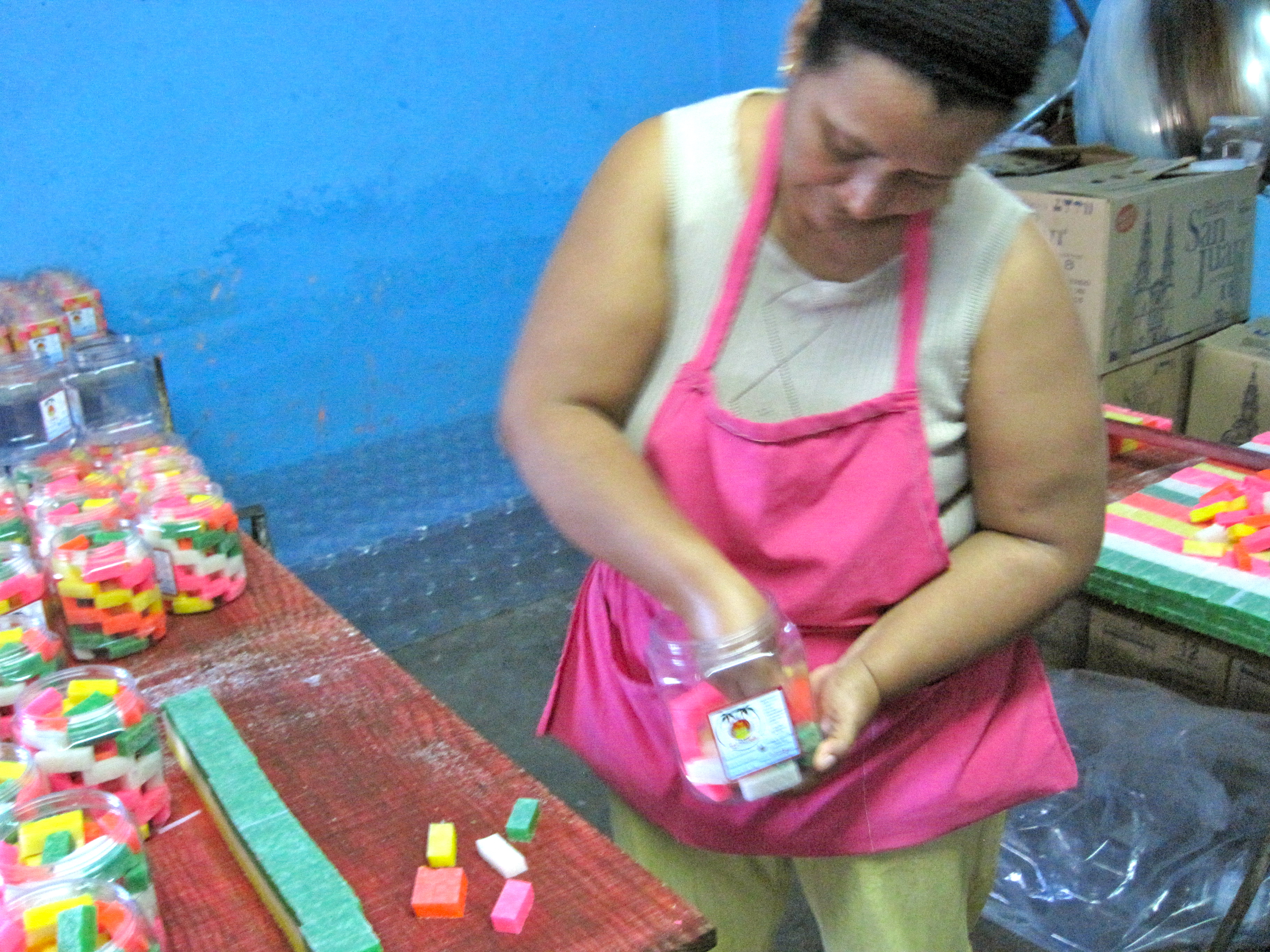
This is the stage of travel where we share our pieces, whether by telling of our travels or just outwardly showing it. As each piece of candy makes it into a plastic rounded jar, the batch is separated. Like the traveler, you are always parting with someone, whether it is a place, home, or friends you have made. Separation and travel may be the most difficult aspect for the traveler, but another colored coconut factory awaits and it all begins again, in a somewhat different way than the one before.
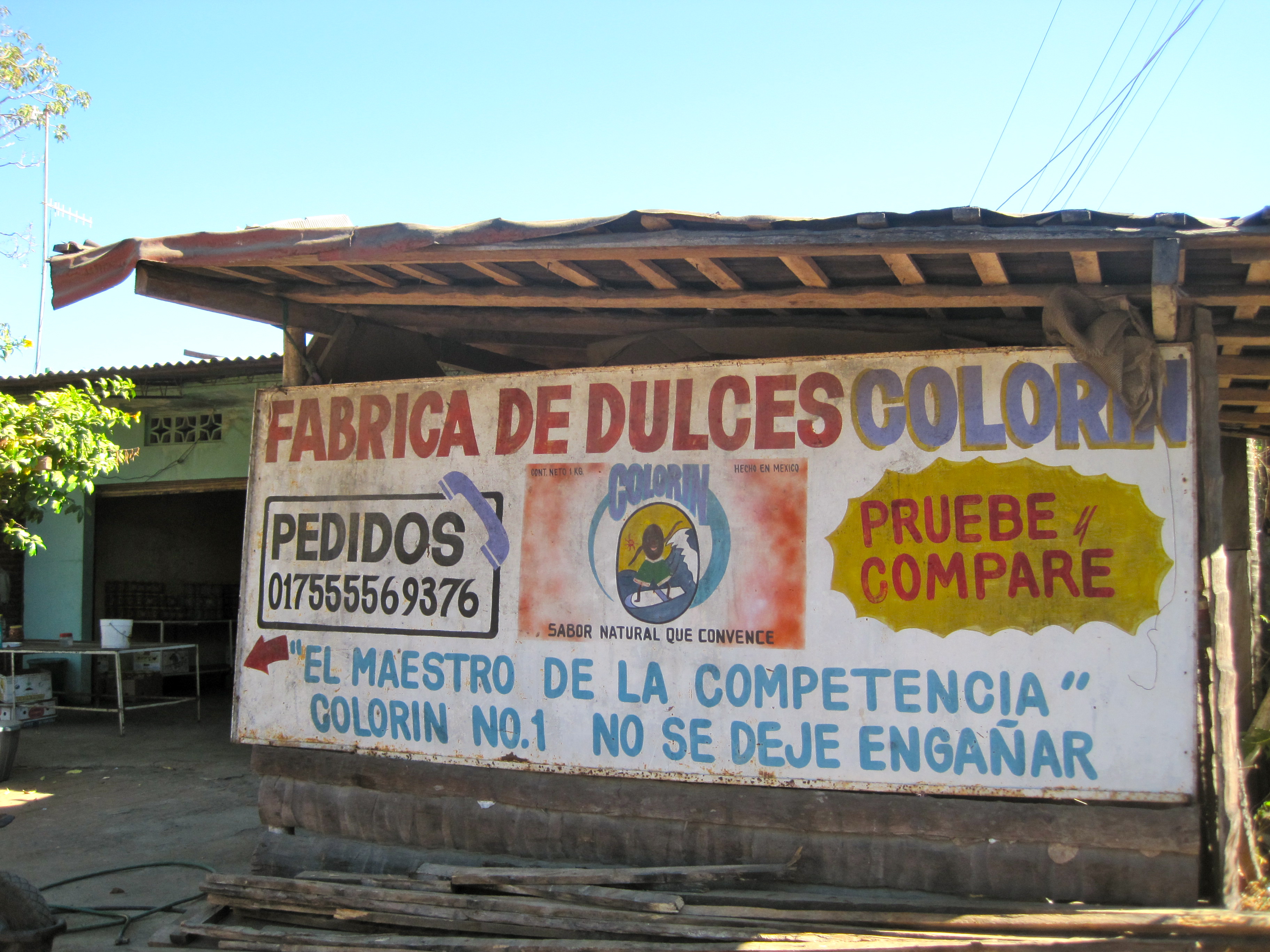
Another coconut candy factory in Juluchuca, Mexico
Is travel a process for you?
The Mexico Board of Tourism in cooperation with the Convention & Visitors Bureau of Ixtapa-Zihuatanejo sponsored this trip. While my travel was paid for in Juluchuca, my thoughts and opinions are always my own.
Very unique article Suzy! I love how you equate the manufacturing process to traveling. It definitely looks like a rough process from your pictures of the “factory,” but in the end, a great product is turned out. Who knew we had so much in common with coconut candy?! 🙂
What a brilliant post! I love how you tied in candy making with traveling. I think traveling is definitely a process for me. Often my strengths and weaknesses come out more often when traveling, especially when put in unexpected situations – which is often the case when traveling.
Such a great post! I’ve never seen anything like this and I love coconut!
I LOVE those candies. Haven’t seen them in years!
LOVE this post. Your words of wisdom are extremely relateable and the photos are fantastic as well. Looks like you had a blast! 🙂
travelling is like coconuts or travellers are like coconuts?
Thanks for an especially unique perspective. Great article.
Hah, love the analogy… and I gotta a feeling I’ll like those coconut candies too.
Suzy,
Thanks for this great story about little Juluchuca. This is a town of 540 families. It has three of these coconut factories and a dozen roadside stands selling these candies as well as artisanal salt. The salt is a great story as well, it has been made the same way since Aztec times when it was tribute from this area to Aztec kings. Also, Juluchuca is home to La Costa Grande, a organic basil coop that exports to the US. Lots of wonderful tastes to share with fellow travelers. Next time you are in the area Suzy, please stop by and visit us at Playa Viva. We buy our coconut candies from a local woman who makes her “cocadas” at home using brown sugar and guyava juice rather than refined sugar and corn syrup. They are not as colorful but they are more tasty and healthy 😉
I really hate the taste of coconut (or maybe it’s the texture?), but I love this post. I’m always amazed at how you can take something like a visit to a candy factory and relate it to the evolution of a traveler. Really great stuff!